Showing posts with label Teamwork. Show all posts

CHAUNCEY BILLUPS ON BUILDING A TEAM


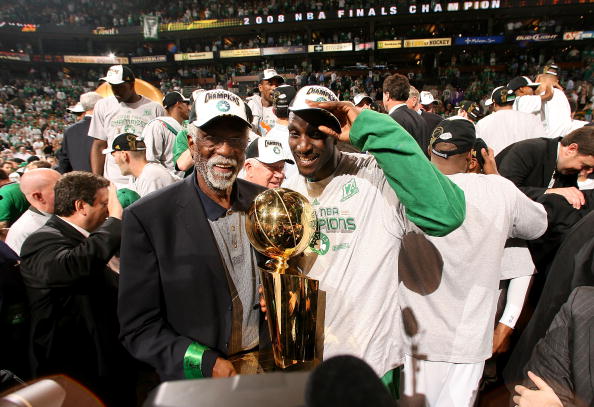
“I think that in any situation you got to get a team. It’s not about names, how many people on your team can make the All-Star Game. It’s not about that at all. It’s about putting the right pieces together. You got to have a cohesive unit. You got to have guys that know to play off of one another, guys that are going to be unselfish on both ends of the floor. Those are things that win championships, and we’ve seen that clear as day in the Finals.’’

As told to Chris Tomasson of Hoopshype

LARRY BIRD ON USING FILM TO BECOME A BETTER TEAMMATE


What I'd do is zero in on plays where I had the ball and see where my teammates were positioned. That way I could tell if I could have made a better play, or if there was someone who was open that I hadn't noticed on the floor. It also helped me make sure my teammates were going to the proper spots on the court. You can't believe how many times I'd be sitting home replaying the game I had just played, and I'd watch myself come off a pick, and I'd see Danny Ainge wide open in the corner, and I'd say to myself, "Geez, how did I miss him?"

MIA HAMM ON TEAMWORK


"Soccer is not an individual sport. I don't score all the goals, and the ones I do score are usually the product of a team effort. I don't keep the ball out of the back of the net on the other end of the field. I don't plan our game tactics. I don't wash our training gear (okay, sometimes I do), and I don't make our airline reservations. I am a member of a team, and I rely on the team. I defer to it and sacrifice for it, because the team, not the individual is the ultimate champion."

COACH K QUOTES


I want to share some Coach K quotes that I read on bleacherreport.com

"That's what I do now: I lead and I teach. If we win basketball games from doing that, then that's great, but I lead and teach. Those are the two things I concentrate on."

"The signing of the floor was not about Maryland or any particular opponent. It's about us. It's about us reminding each other that this is our floor, and we don't take it for granted. That's the only thing.”

"It's always an honor to be ranked high, but whatever is said about you, you take it and then take a realistic look at yourself and who you are. I would look at us and say we've got a chance (to win it all).”

"When we don't match another team's intensity—that doesn't happen very often—then all of a sudden we do 'J.J.-watching,' where we're watching J.J. play. We might as well get tickets and sit behind the bench. No one is doing anything out there.”

"It's not like we have not had close games. We've just been able to win them, and as a result, the reality sometimes doesn't set in that you're weak in certain areas or you're not doing certain things well. ...When you win, sometimes it overshadows a poor performance.

"The truth is that many people set rules to keep from making decisions.”

"Once you win a National Championship, how do you do that again? How do you get the passion to do that again? We won it again right away, the next year. A lot of it had to do with the fact that I didn't give myself an opportunity to enjoy the first one."

"Parents can really help, but they can also really hinder the development of their youngsters."

"That's what I do now: I lead and I teach. If we win basketball games from doing that, then that's great, but I lead and teach. Those are the two things I concentrate on."

"A basketball team is like the five fingers on your hand. If you can get them all together, you have a fist. That's how I want you to play."

"Everybody wants to take responsibility when you win, but when you fail, all these fingers are pointing."

"I have a rule on my team: when we talk to one another, we look each other right in the eye, because I think it's tough to lie to somebody. You give respect to somebody."

"I'm fortunate now that I coach at Duke University and we've won a lot. I have some kids who haven't failed that much. But when they get to college, they're going to fail some time. That's a thing that I can help them the most with."

“I try to see each new season as a new challenge because I have a new team to work with, new opponents to encounter and often new ideas and theories to try.”

“A common mistake among those who work in sport is spending a disproportional amount of time on “x’s and o’s” as compared to time spent learning about people.”


5 E's of Championship Teams


As league play is beginning around country, the quest to become champions is getting more intense. I believe every championship team has these 5 E's in their DNA make up. Here are the 5 E's:


1. Energy (Passion)

2. Engagement (Focus)

3. Effort (Work Ethic)

4. Encouragement (Team Work)

5. Execution (Results)


Championship teams don't have three or four of these, they have all five. The reason is because they can't have one without the other. If there is no energy, then there can be no engagement, without engagement, there will be no effort, without effort, there will be no encouragement, and without the first four, execution will be flawed when needed the most.


Having these won't guarantee you a championship, but without them you'll be hard pressed to be champions!

KEVIN EASTMAN ON THE CELTICS CULTURE


There are 3 core covenants of the Celtics' culture:
1.  Winning/Success
  • Players often say that they want to win championships, but almost always want to do it their way (their playing time, their number of shots, etc.)
  • Your role is based on winning.  You may not like or agree with it, but it is what we need in order to win
2.  Personal Sacrifice

3.  Accountability
  • Personal and to the team
Doc always talks about "confronting reality" and being truthful with today's player.  Doc was very upfront with Shaq about his role/ minutes and was willing to lose him if it was not the right fit.  "Doc would rather lose him than have to trick him into coming."
Celtics set standards of excellence coming into each year.  
Coaching staff makes every decision "through the prism of their culture and standards."
Maintaining the culture:
  • First, they get a head start with who they bring in.  Not everyone can be a Boston Celtic and live/play within our culture.
  • Any non-compliance is dealt with by the "internal leadership" (team leaders)
  • Important to have hidden leaders (Garnett was Glen Davis' leader; Ray was Rondo; Posey was the 2nd unit leader)
  • If needed, Doc will handle a player that is not complying with the culture/standards with a "tremendous dose of reality."
  • Doc encourages his assistants to immediately confront any challenge to the culture.
  • Says that they have very few drastic deviations from their standard or culture.  in 1,875 meetings over the course of the season, players only missed five of them; and none missed by player in the top 10 of our rotation.

JIM HARBAUGH ON DAILY IMPROVEMENT


What we are focused on is improving every day. Daily improvement. Better today than yesterday, better tomorrow than today. This improvement would not only include performance but also relationship with our teammates, family, friends, school, making today the most important day on the calendar, making the next game the most important schedule, making the next meeting most important you’ll have, the next drill is the most productive of the season. We believe what will follow is significant team improvement. Improvement leads to wins, wins lead to championship. Improvement daily equals team success. That’s what we are striving for.

BOSTON CELTICS STANDARDS


While listening to Kevin Eastman he gave the Boston Celtics Standards. Here they are:
  1. Professionalism
  2. No personal agendas
  3. Professional respect
  4. Think of now only
  5. One Way-Celtics Way
  6. Efficient Team
  7. Team of execution
  8. Never have a bad practice
  9. Responsibility
  10. Trust
  11. No EXCUSES

HERM EDWARD DEFINITION OF A TEAM PLAYER


A TEAM PLAYER...
Visualizes what can be.
Understands the big picture.
Realizes that his freedom to do his own think has ended.
Knows that his obligation and responsibility to the team come first.
Has a commitment to goals.
Trusts his teammates and puts value in the team.
Respects his teammates' individual differences.
Handles conflict successfully.
Communicates openly and freely with his teammates and coaches.

4 KEYS TO BECOMING AN ENCOURAGER


Chip Ingram's Four Keys to Becoming an Awesome Encourager:

1. Remember that people are hurting far more than you know, and far more than they show. That person next to you who looks like they have it all together, like everything is going their way – they are probably hurting. How do I know? Because they are just like you and me.

2. You have much more to offer than you realize. So often we think, Oh, I’d love to reach out and help that person, but what could they possibly learn from me? What do I have to offer? According to God – you’ve got a LOT to offer. Reaching out to people takes availability, not ability. You need heart and love, more than skill and knowledge.

3. Encouragement is helping others take the next step that they couldn’t take on their own; it allows them to become more like Christ. Encouragement is much more than a “warm fuzzy.” God uses our encouraging words at just the right time:

* As the spark that inspires someone to persevere through a difficult season
* As a reminder to be obedient even when it’s not what they want to do
* As a prompt to push beyond their comfort zone and obey what God is calling them to do

4. The key to encouragement is attitude. There are certain attitudes that you need to have to be a Godly encourager. In 1 Thessalonians 5:12-21, the Apostle Paul gives us a series commands – exhortations, really – that all revolve around attitude. Why? Because he knows that the attitude of a church and the attitude of individual Christians is the key to creating an environment that is edifying and encouraging.

Develop a Fully Engaged Team


This post is from a 2005 issue of Championship Performance. In the management training book "First, Break All the Rules.", the authors state that the more yes answers workers give to certain key questions, the more engaged they would become at work. Having a team of fully engaged workers will result in lower turnover, higher motivation and higher productivity.

Some of these same qauestions could be asked of athletes as well. The more yes answers they give based on your coaching, the more engaged they will become. In other words, if your players are answering yest to these questions, you can bet that they have 'bought in' to the goals and principles you want them to in your program. Here are the 10 questions, based on a survey developed by the Gallup organization:

  1. I know what it expected of me.
  2. I have the materials, equipment, and resources to do my job the right way.
  3. I have the opportunity to do what I do best on the team.
  4. In the last 7 days, I have received recognition or praise for doing good work.
  5. My coaches care about me as a person
  6. My opinions seem to count.
  7. The mission and or purpose of the team make me feel like my job is important.
  8. My teammates are committed to doing quality work (on the field and in the classroom.)
  9. On a monthly basis, a coach talks to me about my progress
  10. In the past year, I was given opportunities to grow-both as an athlete and a person.

NO COMPLAINING WEEK


We had a very poor second half last night which resulted in losing to Kentucky in the Semi's of the SEC Tournament. It's really easy to start complaining after any loss especially a loss in a tournament setting where it's one and done. Jon Gordon has an excellent book called the "No Complaining Rule" He offers a plan on how to have a "No Complaining Week." I believe this will give us ideas to have a great week of preparation for the NCAA tournament. Here is his action plan:


The goal of a No Complaining Week is to become aware of how negative our thoughts and words can be. The objective is to eliminate mindless complaining and negative thoughts as much as possible by replacing them with positive thoughts and positive habits.

Day 1: Monitor Your Thoughts and Words

Spend today monitoring your thoughts and words. You'll be amazed at the thoughts that pop into your head and come out of your mouth. The key is to become more conscious of what you think and say.

Day 2: Make a Gratitude List

When you wake up in the morning, write a list of the things you are grateful for. When you find yourself wanting to complain, focus on what you are grateful for instead.

Day 3: Take a Thank You Walk

When you wake up in the morning, take a thank you walk. While you're walking, think of all the things you are grateful for. Try to remember this state of gratitude and carry it with you throughout the day.

Day 4: Focus on the Good Stuff

Today, focus on everything that is right, rather than wrong. Focus on what others are doing right, rather than wrong. Praise instead of criticize. Focus on what you get to do versus what you have to do.

Day 5: Start a Success Journal

Today, write down all the great interactions and accomplishments you have had today. Do this throughout the day and before you go to bed.

Day 6: Let Go

Make a list of the things you would like to complain about.Go through this list and identify the things that are within your control that you have the power to change and identify those things that are beyond your control. Identify possible solutions and a possible action plan to the things that are within your control. Write the word surrender next to the items on your list that are beyond your control.

Day 7: Breathe

Spend 10 minutes in silence. Focus on your breathing while praying or meditating and transform stress into positive energy. Throughout the day, any time you find yourself feeling stressed or wanting ot complain, stop for 10 seconds and breathe. Count your breaths and your blessings.

THE LAW OF DIVIDENDS


Here is today's reading from John Maxwell's "The Maxwell Daily Reader":

At this stage of my life, everthing I do is a team effort When I first started teaching seminars, I did everything. Certainly there were other people pitching in, but I was just as likely to pack and ship a box as I was to speak. Now, I show up and teach. My wonderful team takes care of everything else. Even the book you're reading was a team effort. My team is my joy. I would do anything for the people on my team because they do everything for me:

  • My team makes be better than I am.
  • My team multiplies my value to others.
  • My team enables me to do what I do best.
  • My team gives me more time.
  • My team represents me where I cannot go.
  • My team provides community for our enjoyment.
  • My team fulfills the desires of my heart.
Building a team for the future is just like developing a financila nest egg. It may sart slowly, but what you put in brings a high return-similar to the way that compound interest works with finances. Try it and you will find that the Law of Dividends really works. Investing in the team compounds over time...From the book the 17 Indisputable Laws of Teamwork.

Investing in your team pays dividend not only for them and the organization, but also for you.

D-Wade on being a good teammate


Here's a quote I read from Dwayne Wade while he was playing at Marquette:

"Making my teammates better doesn't necessarily have anything to do with me being in the game. It can come in a lot of different areas. It could be attending a study hall if someone needs a study partner, spending time with a teammate. It's doing a lot of things

Team Basketball Gameseva

600 x 400 px | 286.65 kB  Team Basketball GameSeva: Revolutionizing Sports Entertainment and Engagement In the ever-evolving landscape ...