
Show Your Leadership
...Don't Just Talk It
Leadership comes in all sizes, all colors, and all forms. No matter how it comes it has as its foundation “example leadership." No matter what your captains say, what your managers say, or what your CEO says, your staff will not consistently follow words. Words are just sounds from someone’s mouth if they aren't followed up by action and example.
Walking the walk, practicing what you preach, exemplifying the very things you want those you are leading to do is a critical part of leadership. Verbal leadership can help you lead, but on its own, it doesn't pass the test of time.
Verbal leadership on its own can help but it's not mandatory. In my mind, example leadership IS mandatory. People are always observing and reading their leaders. They expect more than words before they buy into what the leader wants. They are looking for examples of the leader doing exactly what he or she is asking them to do.
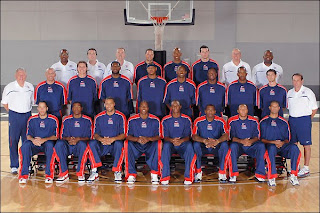
We have some experienced leaders on our team. All are considered to be our hardest workers. Not a day goes by that you don’t see them working on their games or their bodies -- and most days, on both. When they place demands on their teammates, their teammates know they aren't asking them to do anything that they themselves are not willing to do! They have seen them walk the walk. They have seen them working out every day. They have seen these leaders do exactly what they are asking them to do.
For our staff, we have a great leader in Doc Rivers. You will consistently see Doc watching film until the late hours of the night or in the very early hours of the morning. He is never, ever going to ask us to give more to the team than he himself is willing to give. How can’t you work your tail off for a leader like this?
The best leaders don’t just talk a good game. Those leaders are eventually going to be found out, eventually going to lose the trust of their staff. The best leaders are willing to not only "tell" but "show" how to get things done. They live the life of their requests. Simply put, the best leaders ask those they lead to help them reach the team's goals, not just instruct them to do all the work.
Walking the walk, practicing what you preach, exemplifying the very things you want those you are leading to do is a critical part of leadership. Verbal leadership can help you lead, but on its own, it doesn't pass the test of time.
Verbal leadership on its own can help but it's not mandatory. In my mind, example leadership IS mandatory. People are always observing and reading their leaders. They expect more than words before they buy into what the leader wants. They are looking for examples of the leader doing exactly what he or she is asking them to do.
We have some experienced leaders on our team. All are considered to be our hardest workers. Not a day goes by that you don’t see them working on their games or their bodies -- and most days, on both. When they place demands on their teammates, their teammates know they aren't asking them to do anything that they themselves are not willing to do! They have seen them walk the walk. They have seen them working out every day. They have seen these leaders do exactly what they are asking them to do.
For our staff, we have a great leader in Doc Rivers. You will consistently see Doc watching film until the late hours of the night or in the very early hours of the morning. He is never, ever going to ask us to give more to the team than he himself is willing to give. How can’t you work your tail off for a leader like this?
The best leaders don’t just talk a good game. Those leaders are eventually going to be found out, eventually going to lose the trust of their staff. The best leaders are willing to not only "tell" but "show" how to get things done. They live the life of their requests. Simply put, the best leaders ask those they lead to help them reach the team's goals, not just instruct them to do all the work.
ChatGPT
Title: Kevin Eastman: A Masterclass in Leadership
Introduction
Leadership is a multifaceted concept that encompasses qualities like vision, resilience, adaptability, and the ability to inspire others. While many leaders have emerged in various fields, few have left as lasting an impact as Kevin Eastman. Kevin Eastman's journey from basketball coach to leadership guru is a testament to his exceptional leadership skills. In this article, we will delve into Kevin Eastman's life, career, and leadership philosophy, exploring how his insights can inspire and guide individuals on their own leadership journeys.
Table of Contents
Early Life and Career
The Transformational Role of Sports
Kevin Eastman: The Coach
Leadership Lessons from Kevin Eastman
Frequently Asked Questions (FAQs)
1. Early Life and Career
Kevin Eastman was born on April 7, 1955, in Plainfield, New Jersey. His upbringing was steeped in sports, as he was an avid basketball player throughout his youth. This passion for the game eventually led him to the University of Richmond, where he played college basketball.
After graduating from college, Eastman's journey into the professional world took a somewhat unexpected turn. He started his career working in the insurance industry, a world far removed from the basketball court. However, his heart remained in sports, and he soon made a pivotal decision that would alter the course of his life.
2. The Transformational Role of Sports
Eastman's return to the world of sports came in the form of coaching. He pursued a coaching position at Randolph-Macon College in Ashland, Virginia. This marked the beginning of a remarkable journey that would ultimately establish him as a leader both on and off the court.
Key Takeaway: Kevin Eastman's decision to follow his passion for basketball illustrates the importance of aligning one's career with their interests and values. It's a crucial first step towards becoming an effective leader.
3. Kevin Eastman: The Coach
Kevin Eastman's coaching career spans over four decades, during which he held various positions in both college and professional basketball. He served as the head coach at Washington State University, an assistant coach at the University of North Carolina, and later became the Director of Basketball Operations at the University of Maryland.
However, it was his role as an assistant coach in the NBA that truly brought him into the spotlight. Eastman's time with the Boston Celtics, under the leadership of Doc Rivers, was a defining period in his career. The Celtics won the NBA championship in 2008, and Eastman's contributions to the team's success were invaluable. He was known for his meticulous attention to detail and his ability to connect with players.
Key Takeaway: Effective leadership often involves being an astute observer and communicator. Kevin Eastman's success as a coach stemmed from his ability to understand the nuances of the game and convey his insights to his players effectively.
4. Leadership Lessons from Kevin Eastman
Kevin Eastman's leadership philosophy is rooted in practical wisdom gained through his experiences in the competitive world of sports. Here are some key leadership lessons that individuals can glean from his journey:
a. Embrace a Growth Mindset
Eastman believes in the power of a growth mindset, which is the belief that abilities and intelligence can be developed through dedication and hard work. This mindset empowers individuals to embrace challenges and view failures as opportunities for growth.
Quote: "Never underestimate the power of 'YET.' When you say, 'I can't do it,' add 'yet.' It changes the dynamic of your thinking."
b. Focus on the Process
Eastman emphasizes the importance of focusing on the process rather than fixating solely on outcomes. By dedicating oneself to the daily grind and continuous improvement, success becomes a natural byproduct.
Quote: "The result is what happens when you focus on the process. The process is what you can control, the result is not."
c. Authenticity Matters
Authentic leadership is a cornerstone of Eastman's philosophy. He advocates for being genuine, transparent, and true to oneself. Authentic leaders inspire trust and loyalty in their teams.
Quote: "Your players can smell a phony from a mile away. Be real with them."
d. Develop a Strong Support System
Eastman underscores the importance of surrounding oneself with a network of mentors, colleagues, and friends who can provide guidance, support, and feedback.
Quote: "The more you know, the more you realize you don't know. Surround yourself with people who can fill in your gaps."
e. Resilience in the Face of Adversity
Throughout his career, Eastman encountered numerous challenges and setbacks. He believes that resilience, the ability to bounce back from adversity, is a vital quality for leaders.
Quote: "Resilience is not a trait; it's a choice."
f. The Power of Preparation
Eastman's meticulous preparation and attention to detail were key factors in his coaching success. He emphasizes the importance of being prepared for every situation.
Quote: "The only thing that's overrated is being unprepared."
g. Communication and Connection
Effective communication is at the heart of leadership. Eastman stresses the significance of connecting with people on a personal level and tailoring one's communication to resonate with others.
Quote: "Leadership is not about you; it's about the people you're leading."
5. Frequently Asked Questions (FAQs)
Q1: What is Kevin Eastman's most significant achievement as a coach?
A1: Kevin Eastman's most significant coaching achievement came when he served as an assistant coach for the Boston Celtics during their 2008 NBA championship run. The Celtics' victory was a testament to his coaching prowess and the value he brought to the team.
Q2: How can I apply Kevin Eastman's leadership lessons to my own life and career?
A2: You can apply Kevin Eastman's leadership lessons by adopting a growth mindset, focusing on the process, being authentic, building a strong support system, cultivating resilience, prioritizing preparation, and enhancing your communication skills.
Q3: What is the importance of authenticity in leadership, according to Kevin Eastman?
A3: Authenticity in leadership, according to Kevin Eastman, is crucial because it fosters trust and credibility. Authentic leaders are genuine, transparent, and true to themselves, which enables them to connect with and inspire their teams effectively.
Q4: How can I develop resilience in the face of adversity, as Kevin Eastman suggests?
A4: To develop resilience, embrace challenges as opportunities for growth, maintain a positive outlook, seek support from your network, and keep moving forward despite setbacks. Resilience is a choice that can be cultivated over time.
Q5: What role does preparation play in Kevin Eastman's leadership philosophy?
A5: Preparation is a fundamental aspect of Kevin Eastman's leadership philosophy. He believes that being well-prepared for any situation is essential for success. Preparation instills confidence, reduces anxiety, and allows leaders to make informed decisions.
Conclusion
Kevin Eastman's remarkable journey from a passionate basketball player to a celebrated coach and leadership guru is a testament to the enduring power of effective leadership. His practical wisdom, rooted in real-life experiences, offers valuable insights that can inspire and guide individuals on their own leadership journeys. By embracing a growth


No comments:
Post a Comment